With today’s technology, we can provide many different tools that can give you overview and control. Unfortunately, there is a lack of this kind of tool when you are unemployed and have to go through an application process. Imagine it’s getting closer to the end of your education, and you have started to look for a job. With help from technology, it is easier for you to find advertisements online. You can submit job applications online. On different websites, you can also create profiles which your own CV is linked to. There exists many different platforms that can provide job advertisements. In order to apply for all these positions, you end up creating accounts on several platforms. In addition, you submit applications to multiple businesses through the company's own website. After a few weeks, you are done with your education and realize that it is your student e-mail which is stated in the applications you have sent. This e-mail is no longer in use as you are no longer a student. Thus, your employer will not be able to contact you via e-mail. You also need to change your CV, because you can now inform that you have completed your education.
Human errors and changes becomes a challenge when you must remember where your applications are registered, especially when the number of applications begins to increase. It does not help that multiple processes are unique to the different companies. This gives you a limited overview of where you have a profile, what job applications you have sent, application deadlines, interesting job advertisements and if you have remembered to submit an application to your desired positions. In other words, there is a whole range of different challenges, even with today's modern application processes. Everything would have been so much easier if all this information could be organized and assembled in one place. Don’t you agree?
To map out the market for such a solution and see what others think about the case, a survey was conducted. This was done using a Google form consisting of seven questions. It was shared on social media, and registered 110 responses. The result gave inspiration to find a solution to the problem.
The questions in this survey looks at the age and gender of the participants, in addition to mapping their opinions on the job application process, and on a product that can make this process less tedious.
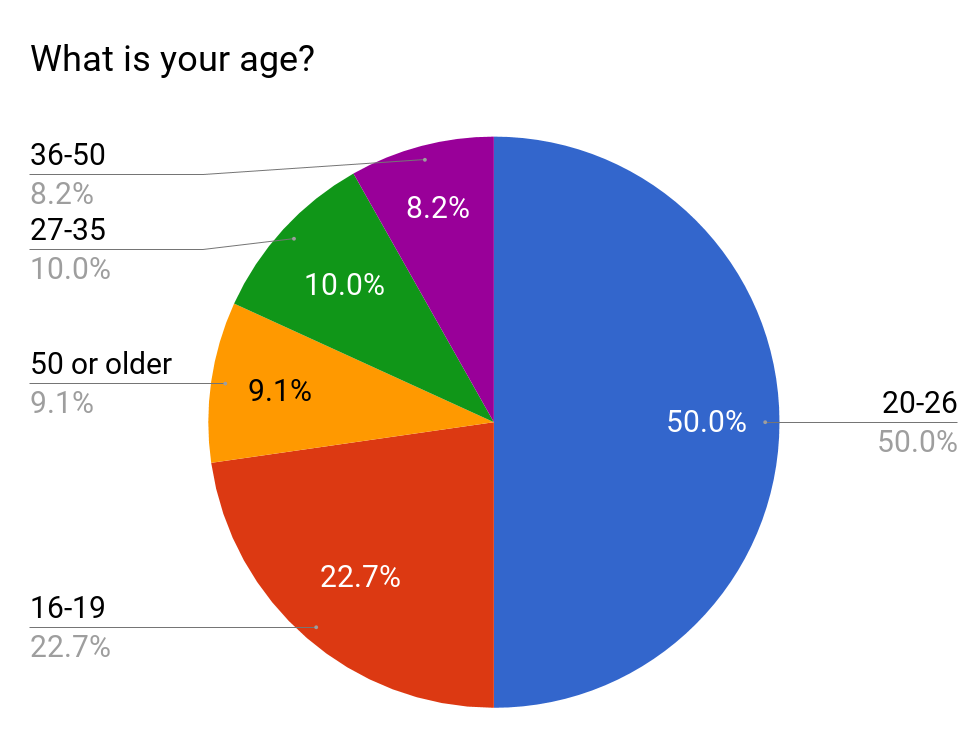
We asked for age to get a better understanding of why the people responded as they did, as well as see potentially useful relationships. It is understandable that those who approaches the retirement age are not as interested in this problem. We see from the results that about 50% of those who responded to the survey are in the age group 20-26 years. This is the typical age to complete higher education, and this group is therefore very relevant to the problem of searching for a job. Otherwise, we see it as positive that we have participants in all age groups, so that we can count the selection as representative of age.
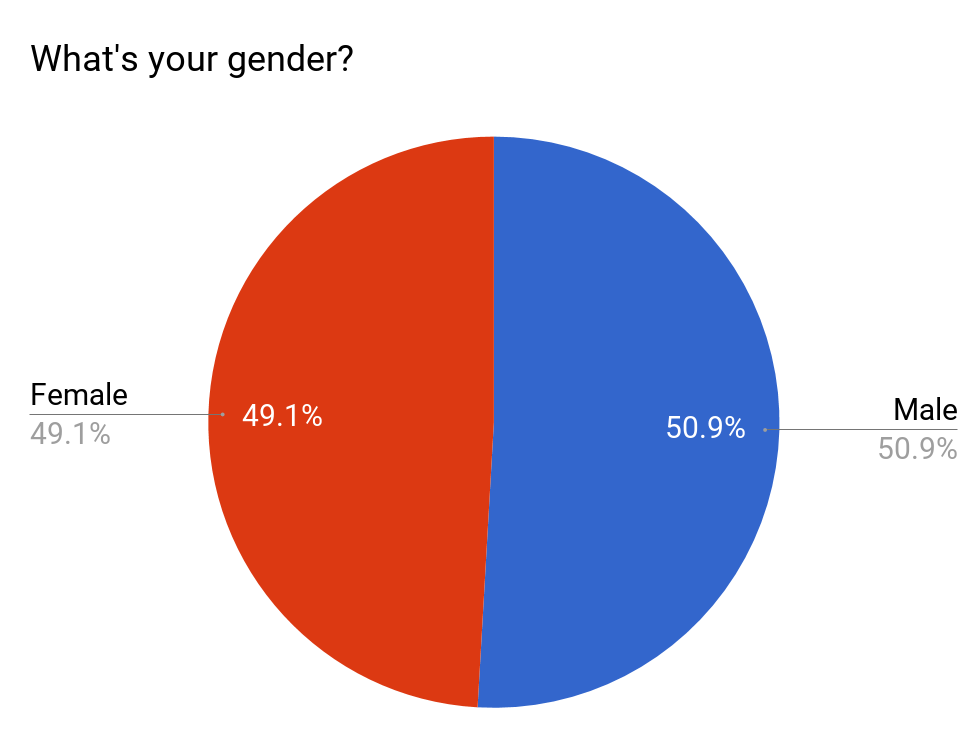
Next up is to see what gender the participants identify themselves as. We see from the results below that the participants are evenly distributed between men and women. It would be quite useful for the development of a product to receive feedback from both women and men. Such a distribution is therefore very positive. The participants also had the option to answer "other" to this question, but no one chose this alternative.
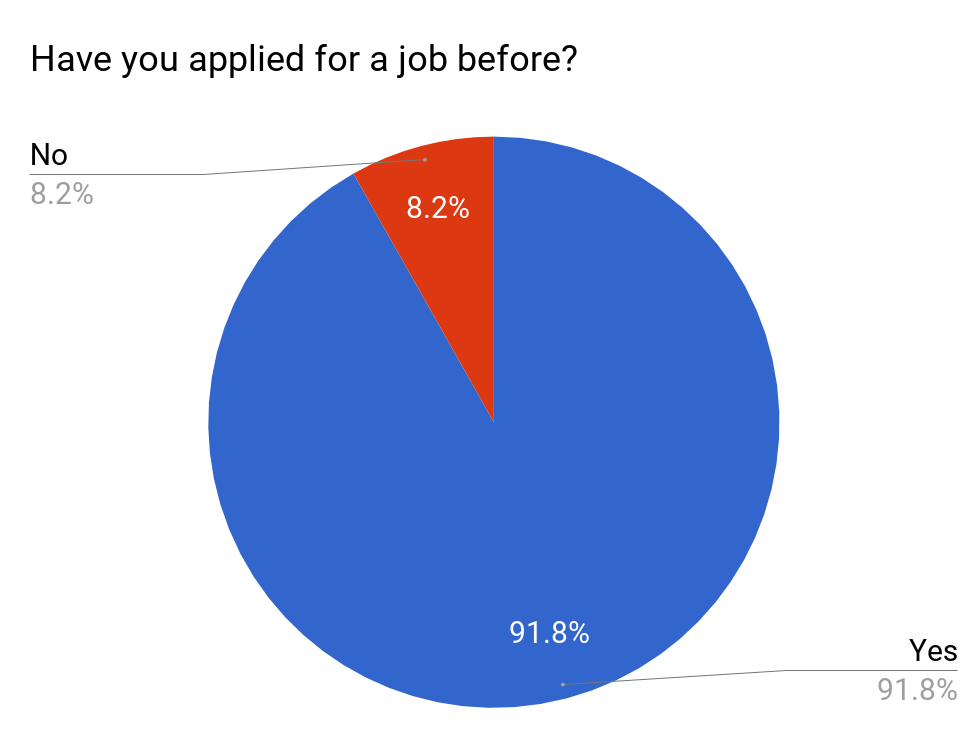
If a person has not applied for a job before, their participation is not really relevant to this survey. Therefore a person, who has not applied for a job before, will be automatically sent to the final page of the survey. As shown by the results, this included 8.2% of the participants. Most of the participants that this consists of are in the age grouping 16-19 years. It includes less than 20% of this group, and therefore will not substantially affect overall result.
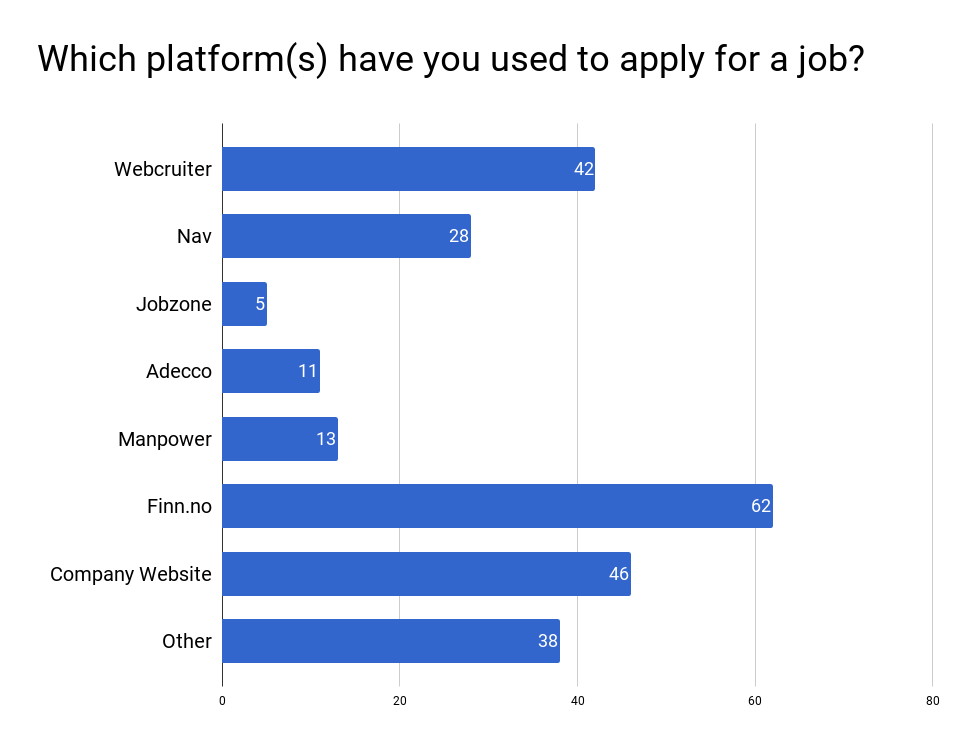
For the development of our potential solution to the problem, it was important to have an overview of which platforms are commonly used to find positions online. We listed the most common options, but it was also important for us to see what people wrote under the "other" option. Here were answers like: recruitment agency, findaPhD.com, on the company's website(even though it was listed), academicwork.no, linkedin.com, the newspaper, acquaintances, jobbnorge.no, job.tu.no, frilansbanken.no, indeed.com and mail. Some of these suggestions are not platforms where applications can be submitted, but rather places to find job information. The question must therefore be interpreted as misunderstood. This, however, will not affect the overall outcome of the survey, as these answers were only meant to be used in the development of the solution to the problem.
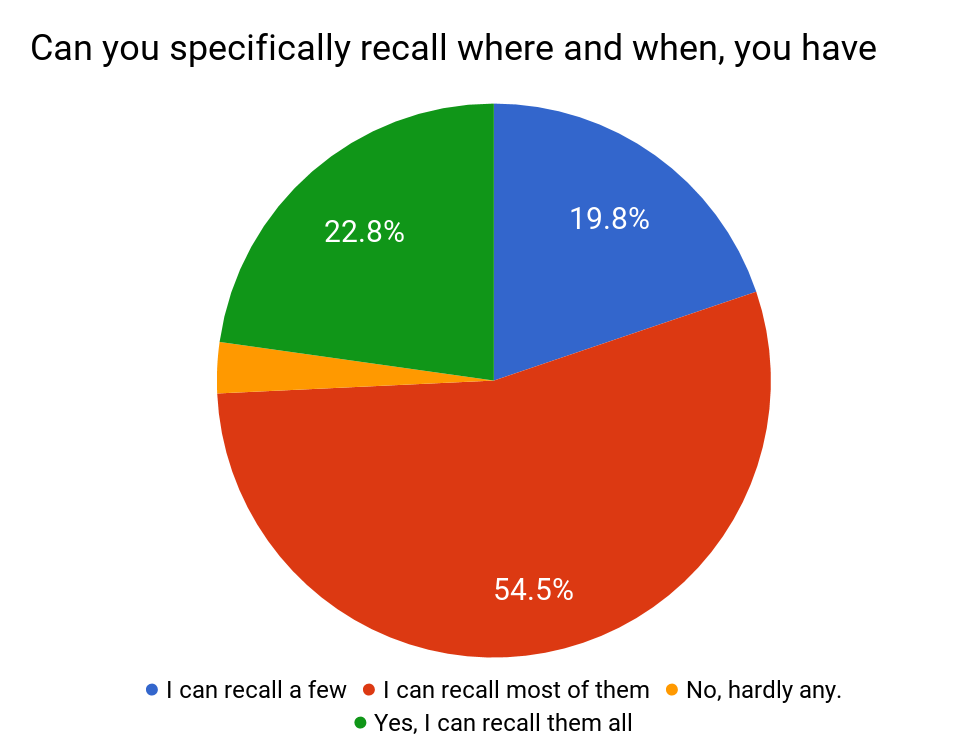
To find the need for a platform that keeps track of your applications, participants were asked if they remember all places they've searched for a job. More than half answered that they remember most of the jobs they have applied for. It is still almost 20% who think they only remember a few. These persons are also in the age group 20-26 years. This may imply that they are or were recently in a job search process.
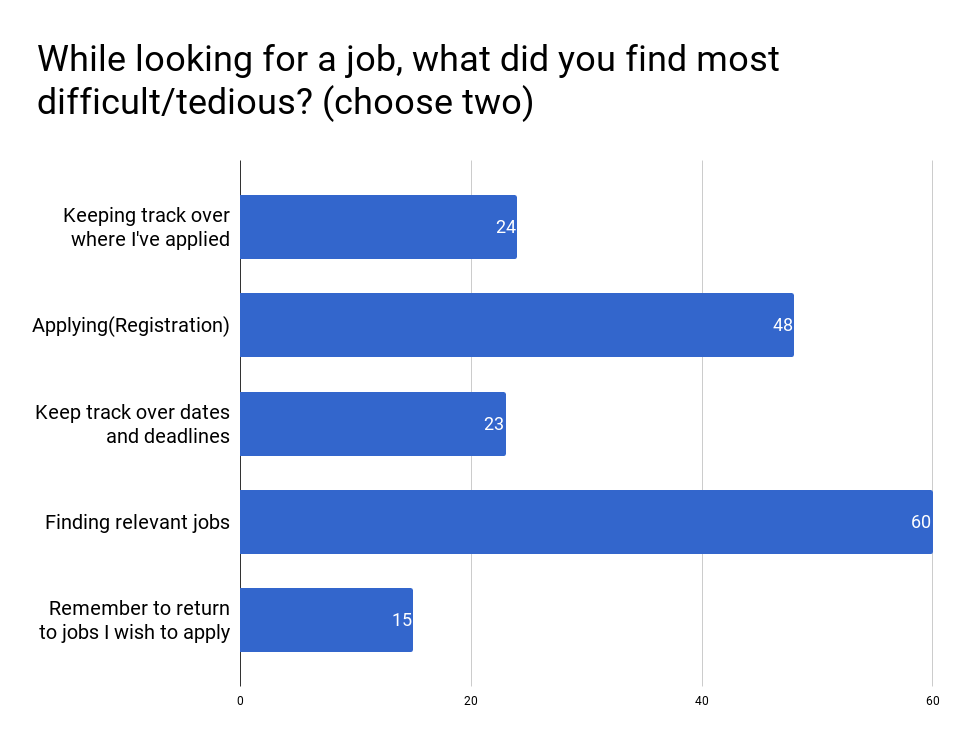
To get a clearer picture of the participants searching process, they were asked what they think is the most challenging. The results show that most people find it hardest to find relevant jobs, closely followed by getting the registry an application. However, we see that a significant amount finds it challenging to remember where applications are registered, as well as to remember deadlines. It appears to be a market for solutions that help job seekers in their everyday lives.
To get a sure answer as to whether there might be a market for a possible solution to the challenges of applying for a job, participants were asked if this would be relevant to them. Here we received a very positive response. More than half answered that they would use such a solution, of which 58.6% were women. It shows that such a product is useable to both genders. A total of 35.6% of the participants also replied that they might use it.
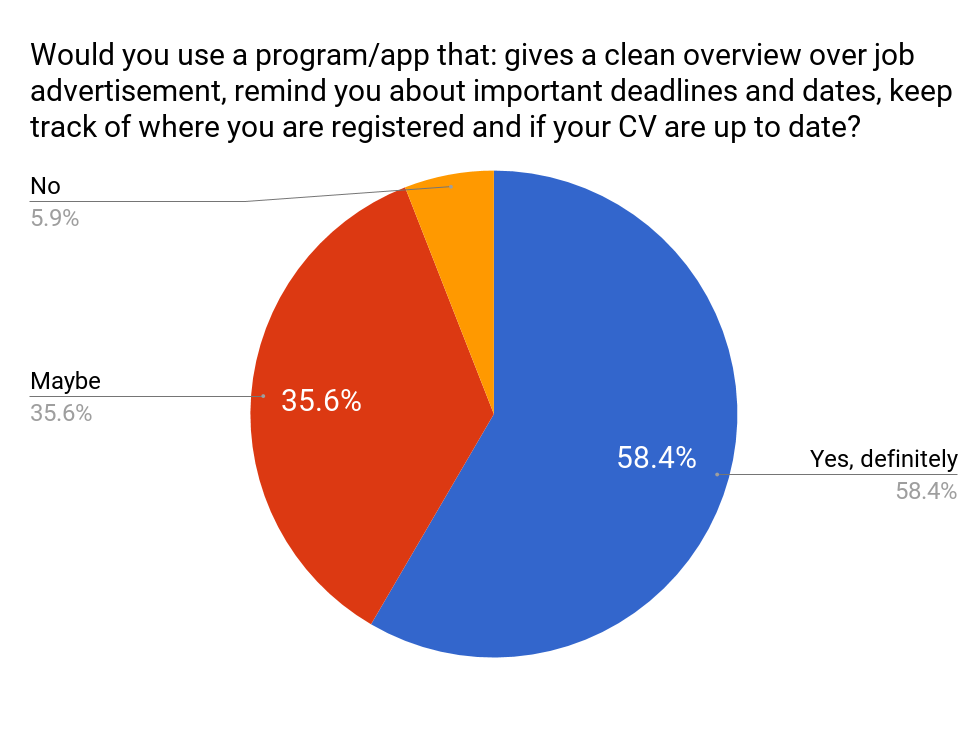
We can conclude that there can be a market for a product that provides a clear overview of job advertisements and applications, reminds you of important dates and deadlines, and also remind you of where you have registered- and whether your CV is up to date. It will be essential for the success of the application that the design is functional and satisfying for the user, so that they want to use it. The survey does however not give information on the potential revenue of such a solution. The survey participants were never asked what they would be willing to pay for the product. It will therefore be important to consider this in the development of the product if the goal is to make money. There is a possibility that several of the participant who were positive to the product would no longer be positive if they would have to pay for it. The market would in this case not be as good as the survey intially suggests.